About Us
Mini-gastric bypass
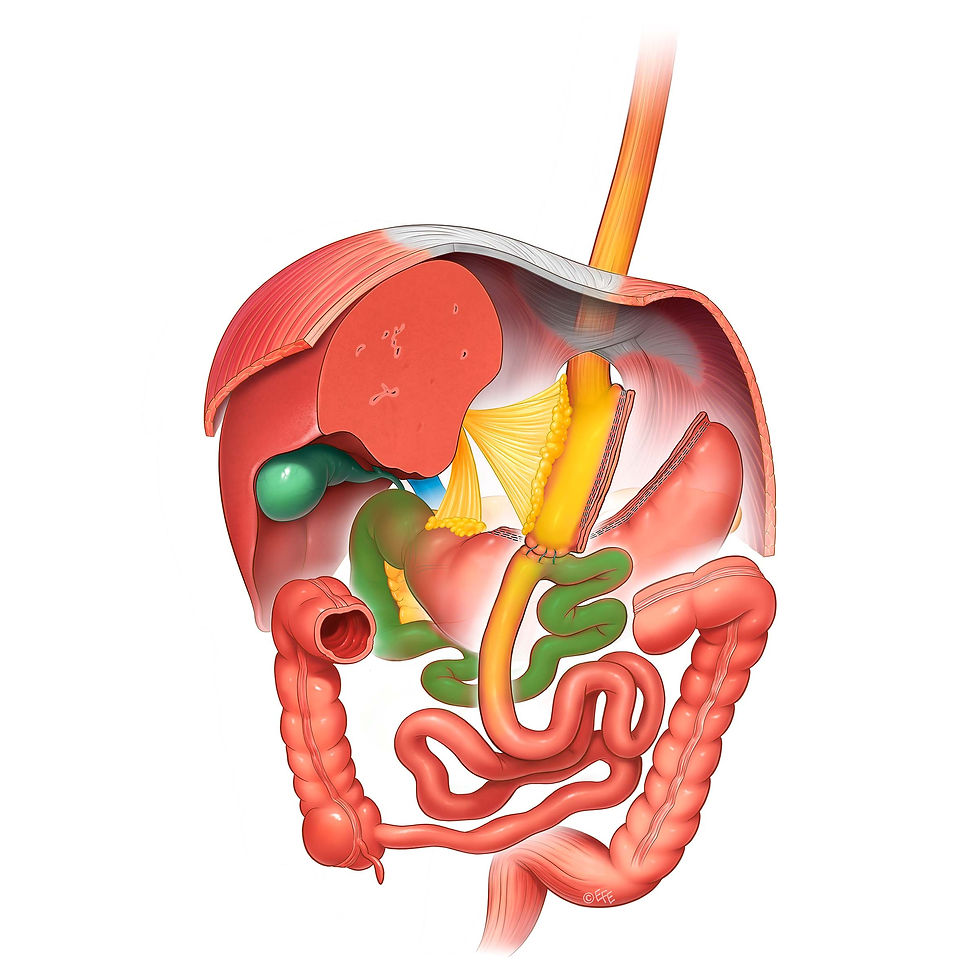
The one anastomosis gastric bypass (OAGB), often called mini-gastric bypass (MGB), is a type of bariatric surgery that consists of two components: a long, narrow (restrictive) pouch from the lesser curvature of the stomach; and a 150-200 cm bypass of small intestine that connects to the outlet of the newly created stomach, leading to significant malabsorption (fat).
How does it work?
The newly created gastric pouch can hold less food, meaning fewer calories are ingested. Furthermore, food doesn't come into contact with the first portion of the small intestine, resulting in decreased absorption. Altering the flow of food through the gastrointestinal tract has a profound effect on decreasing hunger, increasing satiety, and allowing the body to reach and maintain a healthy weight. The impact on hormones and metabolic health often results in remission of type 2 diabetes even before weight loss occurs. Patients require vitamin and mineral supplementation after surgery.
Advantages
-
The expected weight loss is comparable to that of Roux-en-Y gastric bypass, or better (the average excess body weight loss is 75% after one year).
-
It promotes the remission of comorbidities, especially type 2 diabetes.
-
This procedure has proven to be technically simple, safe, and effective, resulting in permanent weight loss, being easily reviewed and, if necessary, reversible.
What to expect?
-
The expected weight loss is comparable to that achieved with a Roux-en-Y gastric bypass, or even better (body weight loss range of 30% to 40%). The same is true for the remission of comorbidities, especially diabetes.
-
After surgery, patients require (micronutrient) supplementation comparable to that required after a Roux-en-Y gastric bypass. In addition, there is an increased risk of iron deficiency and fat-soluble vitamin deficiency.
-
Fat malabsorption can affect quality of life in some patients, especially after a high-fat diet due to abdominal distension and steatorrhea.
* Atlas of Bariatric and Metabolic Surgery of The International Federation for the Surgery of Obesity and Metabolic Disorders (IFSO)